

Pros, Cons, Limitations, and What You Really Need to Know
Artificial intelligence has entered nearly every corner of our lives—from how we shop to how we plan our day.
And naturally, people are beginning to wonder: Can AI help with my mental health?
The answer is both yes and not entirely.
As a trauma-informed therapist trained in EMDR, IFS, AEDP, and somatic modalities, I’m seeing more clients turn to AI
tools for support between sessions. Some use them to journal, process thoughts, or practice coping strategies. Others
are curious whether AI can replace therapy altogether.
This post explores the nuances: the benefits, the risks, the
ethical considerations, and the takeaways to help you make informed decisions about
how (or if) to integrate AI into your healing journey.
Four Potential Benefits of Using AI in Your Mental Health Process
1. Immediate Support, Anytime
AI can provide grounding prompts, reflective questions, and practical tools 24/7. For someone dealing with anxiety,
intrusive thoughts, or overwhelm, that immediate accessibility can feel soothing and stabilizing.
2. A Non-Judgmental Space
For some people, opening up to an AI feels safer than opening up to a person. AI doesn’t react, doesn’t get
overwhelmed, and won’t shame or judge. This can create a sense of psychological permission to explore vulnerable thoughts.
3. Helpful for Psychoeducation and Skills Practice
AI can explain concepts like the window of tolerance, attachment styles, parts work, polyvagal theory, or cognitive
reframing in a clear, digestible way.
It also excels at:
- Generating coping strategies
- Helping you journal
- Reframing thoughts
- Practicing IFS-informed “unblending” questions
- Reviewing a thought spiral or emotional trigger
4. Useful Between Therapy Sessions
For clients already doing the work with a therapist, AI can help them:
- Clarify what they want to bring into therapy
- Track patterns
- Practice self-regulation
- Explore parts and emotions
- Integrate session insights
Used well, AI can extend the therapeutic container—not replace it.
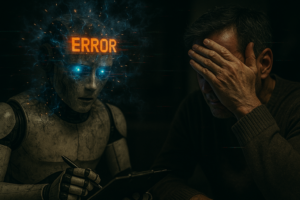
Four Limitations and Risks of AI for Therapy
1. AI Cannot Replace the Human Nervous System
Trauma healing is relational. It depends on co-regulation, attunement, pacing, and the felt experience
of safety. AI can mimic understanding, but it cannot sense, feel, or attune.
There’s no substitute for:
- A therapist reading your facial expressions and body cues
- The energetic safety of being seen and understood
- Adaptive pacing based on real-time nervous system responses
- Relational repair when misattunements occur
2. AI Can Miss Nuance or Give Inappropriate Advice
If you’re in an activated, dissociated, or overwhelmed state, AI may:
- Misinterpret your emotional needs
- Miss signs of dysregulation
- Give advice that feels invalidating or unsafe
- Overlook subtle red flags that a trained clinician would catch instantly
AI is advanced pattern recognition—not clinical judgment.
3. Privacy and Data Concerns
Even with encrypted systems, AI platforms are not equivalent to HIPAA-protected therapy environments.
- Some tools store conversations on servers
- Some train their models using user inputs
- Not all platforms are transparent about data retention
It’s important to use discernment with personal details and emotionally sensitive disclosures.
4. Lack of Accountability
Therapists are ethically, professionally, and legally responsible for the care they provide. AI is not.
This is especially important when:
- You’re dealing with trauma, PTSD, or complex emotional patterns
- You’re in crisis or need crisis management
- You need long-term continuity of care, tracking, or treatment planning
When AI Can Be Helpful—and When It Can’t
AI Can Support You When:
- You want help journaling, reflecting, or organizing your thoughts
- You’re learning about Internal Family Systems or identifying parts
- You want grounding exercises or somatic prompts
- You’re seeking quick psychoeducation
- You’re preparing for or integrating therapy sessions
- You’re tracking emotional patterns or triggers
AI Should Not Replace Therapy When:
- You have a trauma history or complex PTSD
- You struggle with depression, anxiety, or panic attacks
- You experience dissociation or shutdown
- You’re navigating attachment wounds or relational trauma
- You’re in crisis or having thoughts of self-harm
- You need deep relational repair, EMDR, or somatic processing
Ethical Questions Worth Asking Yourself
Before using AI for mental health purposes, try reflecting on:
- What am I hoping AI will give me right now?
(Validation? Regulation? Clarity? Distraction? A sense of being less alone?) - Is this supplementing therapy or substituting it?
- How do I feel after using it?
More connected—or more numb, spiraled, or confused? - Am I avoiding bringing real emotions to a real relationship?
- Am I sharing information I’d feel uncomfortable having stored?
How to Use AI Wisely in Your Healing Process
1. Use AI as a Companion, Not a Therapist
Think of AI as a journaling partner, reflection aid, or resource—not a replacement for the attunement and safety of a
trained human nervous system.
2. Bring AI Insights Into Therapy
If AI helps you unpack thoughts or identify parts, bring those insights into your sessions. Together, you and your
therapist can deepen, pace, and integrate the work.
3. Set Boundaries Around What You Share
You don’t owe any app or platform your most private details. Use discernment with what you disclose and where.
4. Notice Your Nervous System
After interacting with AI, pause and check in:
- Do I feel more grounded or more activated?
- Do I feel calmer or more chaotic?
- Did this move something forward—or keep me looping?
5. Let AI Support Your Growth, Not Replace Your Relationships
Healing happens in connection—with yourself and with others. AI can be a tool, but it cannot replace being truly seen,
understood, and emotionally met by another human.
Final Takeaways
AI can be a powerful companion for reflection, journaling, psychoeducation, and emotional support between therapy
sessions. It can make tools more accessible, help you organize your thoughts, and offer a non-judgmental sounding board.
But AI cannot replace the depth, nuance, and healing potential of a real therapeutic relationship—especially when it
comes to trauma, attachment, and the nervous system.
The most empowered approach is a balanced one: use AI as a resource, not a replacement. Let it support
your growth while staying rooted in human connection, attunement, and clinically grounded care.
If you’re curious about integrating AI into your healing process—or you want support navigating your inner landscape—
I’m here to help.
